Indoor Herb Gardens
There is nothing like having access to indoor herb gardens filled with fresh herbs right when you need them. When you grow herbs outside, you can't get them fresh all year long unless you live where the climate allows.
Growing herbs inside can be as simple as growing them outdoors. If possible, you'll want your indoor garden either in or near your kitchen for easy access. Choose a window sill that allows for at least partial sunlight. Southern facing windows provide the most sunlight and the northern facing ones typically won’t provide enough. In the spring and summer, take these plants outdoors on your patio for fresh air and plenty of direct sunlight.
The most convenient and quickest way to establish your indoor herb garden is to buy young plants from your local garden center.
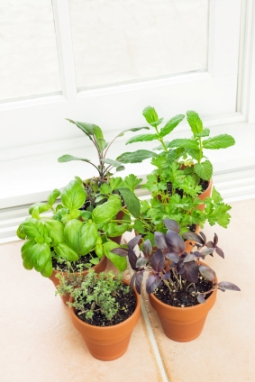
Plants that thrive in an indoor garden include:
- Basil
- Rosemary
- Oregano
- Lavender
- Chamomile
- Thyme
- Sage
- Chives
- Mint
Planting
Start with three of your favorite herbs (you can add more as you gain experience). Choose any container for your indoor garden (see below for some good options). Insure the pot has drainage holes or rocks at the bottom to create a drainage reservoir for excess water to run into. Herbs cannot sit in waterlogged soil or they will die.Use a good quality potting soil rich in organic material. Don't be tempted to use dirt from outside as this can get compacted easily and will strangle the plants. Transplant you new plant into the container and water. Let the plants acclimate for a month. When you start to see new growth, you can start clipping and enjoying the fresh herbs.
Growing Tips
- Indoor herbs need at least 6 hours of sunlight, otherwise they become leggy and lose their flavor
- Indoors plants like humidity - using my steam cleaner once a week, I blow warm steam on the leaves which not only provides humidity but cleans the leaves!
- Indoor plants like air circulation but not cold drafts
Start Your Indoor Garden Today!
Let's get that indoor garden going! Here are a variety of different indoor gardens and accessories. If you do not find exactly what you are looking for, click on the store name to go directly to the store's website to search more easily.If you are a coupon or deal shopper, you will now find the latest deals and coupons from our various partners. In addition, there is a search box that will help you locate a specific deal or coupon for what you are looking for. If a code is needed, click on the box, and it will reveal the code and take you to the store. If no code is needed, simply click on the box, and a new window will open for the store.


Search Our
Family of Sites:
Translate the Page
Visit The Basil Market
For All Your Shopping Needs
Recipe Share

Use One; Add One
New! Comments
Let's hear from you! Leave me a comment in the box below.