Hydroponic Gardens
In hydroponic gardens, pebbles rather than dirt hold up the plant's stem and roots. Just about any plant thrive in this system, especially basil. Hydroponic gardens are easy, clean, odorless and non-allergenic. The need to transplant is greatly reduced. And, there is no more 'over' or 'under' watering resulting in fewer plant losses. Hydroponic plants absorb air pollutants in your home and transforms them into oxygen freshing the air and making you feel better.
Reasons to Consider Hydroponic Gardens
- Healthier - no dirt
- Reduce allergies; dirt holds spores, mold,mildew.
- Pest free - no soil born pests like dirt gnats
- Reduce odors
- Watering is easier
- Fertilize when you water, and less frequently
- Over watering and under watering are eliminated
- Plants like it
- Nutrients are distributed evenly to the roots
- Root aeration since pebbles do not compact like soil
- Less maintenance for you
- Pebbles don't have to be replaced and can be reused
- Hydroponic plants have smaller root systems: less transplanting
- Plants don't get root-bound as you can usually lift up on the basket to clip the roots
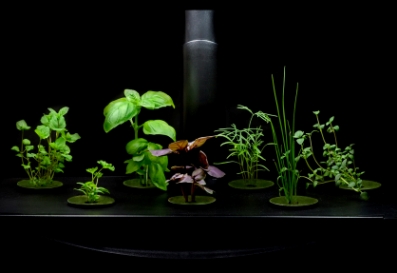
How does it work?
There are five components to hydroponics. Hydroponic container kits are affordable and typically available at your local nursery.- The plant
- Pebbles - the plant sits in a pile of clay-fired pebbles
- Inner pot and outer pot - the pebbles sit in an inner pot that has slits for water access. The inner pot also has a slot for a water level indicator. The inner pot sits in a decorative non-porous outer pot that is slightly larger.
- Water level indicator - a simple float tells you when the pot needs water
- Liquid nutrient - plant food
Steps To Transplanting
Preparation - gather all materials at the kitchen sink: a new plant, pebbles (rinsed), inner pot with water level indicator, outer pot.Remove the plant from its dirt pot. A dry plant is a better starting point. Hold the plant at the base near the dirt and gently wiggle it out, dirt and all. Remove the dirt form the plant. Knock off loose dirt clumps. Hold under gently running, room temperature tap water to rinse of the remainder of the dirt. Touching roots is ok, but gently please. Trim off dead or extra roots.
Plant the plant. Cover the bottom of the inner pot with pebbles, about an inch. Place the plant on the pebbles, and spread out roots. Hold in place with one hand while pouring more pebbles around the plant roots up to the base. Tap the container to settle the pebbles, and then rinse under room temperature running tap water.
Place the inner container in the outer container, and fill the pot with water until the water level indicator shows it’s full. When you are transplanting use water only, no nutrients are added for approximately 4 weeks.
Easy Care and Feeding!!!
Feeding - Tapwater is added to the nutrient solution, follow the directions on the liquid nutrient container. Root-bound - pick up the inner pot from time-to-time and clip the roots that are extended through the slits. Light requirements - check the label that comes with the plant for light requirements.Hydroponic Products
Below you will find several sources for hydroponic equipment. If you do not find exactly what you are looking for, click on the store name to go directly to the store's website to search more easily. For instance, Kalyx has over 200 hydroponic related products.If you are a coupon or deal shopper, you will now find the latest deals and coupons from our various partners. In addition, there is a search box that will help you locate a specific deal or coupon for what you are looking for. If a code is needed, click on the box, and it will reveal the code and take you to the store. If no code is needed, simply click on the box, and a new window will open for the store.


Search Our
Family of Sites:
Translate the Page
Visit The Basil Market
For All Your Shopping Needs
Recipe Share

Use One; Add One
New! Comments
Let's hear from you! Leave me a comment in the box below.